

LIVE REPORT

★ FRESH LATEST UPDATE ★

Connecting to real-time feed...

U.S. Judge Strikes Down 75-Country Immigrant Visa Suspension: What Applicants Need to Know

U.S. federal courthouse after ruling on 75-country immigrant visa policy
A federal court ruling has changed the legal position of the U.S. government's 75-country immigrant visa suspension.

A major change is unfolding for thousands of people waiting for U.S. immigrant visas. A federal judge has struck down a Trump administration policy that had suspended the issuance of immigrant visas to nationals of 75 countries. The decision could reopen an immigration pathway that had been placed on hold for months and may be especially important for families whose applications were delayed or refused because of the policy.

But there is an important point that applicants should understand: the court ruling does not mean every affected person will automatically receive a U.S. visa. Instead, it removes the blanket nationality-based restriction and puts affected cases back into the normal legal framework for individual visa decisions.

What happened to the 75-country U.S. immigrant visa policy?

On January 21, 2026, the U.S. Department of State paused the issuance of immigrant visas for nationals of 75 countries. The administration said the policy was intended to address concerns that some immigrants could become dependent on public benefits after entering the United States.

The policy affected countries across several regions, including parts of Asia, Africa, Latin America, the Caribbean, the Middle East and Europe. The official State Department list included countries such as Bangladesh, Pakistan, Brazil, Colombia, Egypt, Ghana, Jamaica, Nigeria, Nepal, Russia, Somalia, Iran and Afghanistan, among many others.

The problem for many applicants was that the policy operated broadly. Instead of relying only on an individual applicant's financial circumstances, the nationality of the applicant could become the deciding factor in whether an immigrant visa could be issued.

That created difficult situations for families who had already spent months or years completing petitions, submitting documents, attending interviews and preparing to reunite in the United States.

Why did the federal judge strike it down?

Federal courthouse interior related to U.S. immigration visa ruling
The federal court decision challenges the blanket suspension of immigrant visa processing for nationals of 75 countries.

On August 21, 2026, U.S. District Judge Jeannette A. Vargas of the Southern District of New York ruled against the policy.

The court found that the policy went beyond the statutory authority of Secretary of State Marco Rubio and conflicted with federal immigration law. The judge also concluded that immigrant visa decisions are supposed to involve the legally required assessment of individual applicants rather than a blanket refusal based simply on nationality.

In other words, the court's decision was not simply about whether the government could be strict about immigration. The central issue was how that authority was being used and whether the government could categorically prevent eligible people from receiving immigrant visas because they came from particular countries.

The ruling vacated the policy and also set aside visa refusals that were based solely on the now-invalid policy.

Important: This ruling concerns the 75-country immigrant visa suspension. It should not be confused with the separate U.S. travel restrictions covering nationals of other countries. Those policies are legally distinct and may continue to apply independently.

Does this mean the visa ban is completely over?

For the specific 75-country immigrant visa suspension challenged in court, the judge's order is a major change because the policy itself has been vacated.

However, applicants should not assume that every embassy will immediately issue visas the moment they hear about the ruling. Consulates may need time to review affected cases, update internal procedures and determine how individual applications should move forward.

The U.S. government could also seek further review of the decision. Immigration litigation can move quickly after an important ruling, so applicants should pay attention to official instructions from the U.S. Department of State and their specific embassy or consulate.

What happens to people whose immigrant visa was refused because of the 75-country policy?

This is one of the most important parts of the ruling.

The court set aside visa refusals that were based solely on the 75-country policy. That means an applicant who was affected only because of the blanket suspension may have a path toward reconsideration under the normal immigration process.

That does not mean the applicant has already been approved.

The consular officer can still examine the applicant's eligibility under the Immigration and Nationality Act and other applicable rules. Other issues, such as incomplete documentation, inadmissibility, fraud concerns, medical requirements or financial eligibility, can still affect a visa decision.

The key difference is that the applicant should no longer be refused solely because their nationality was included in the 75-country suspension that the court struck down.

What should affected applicants do now?

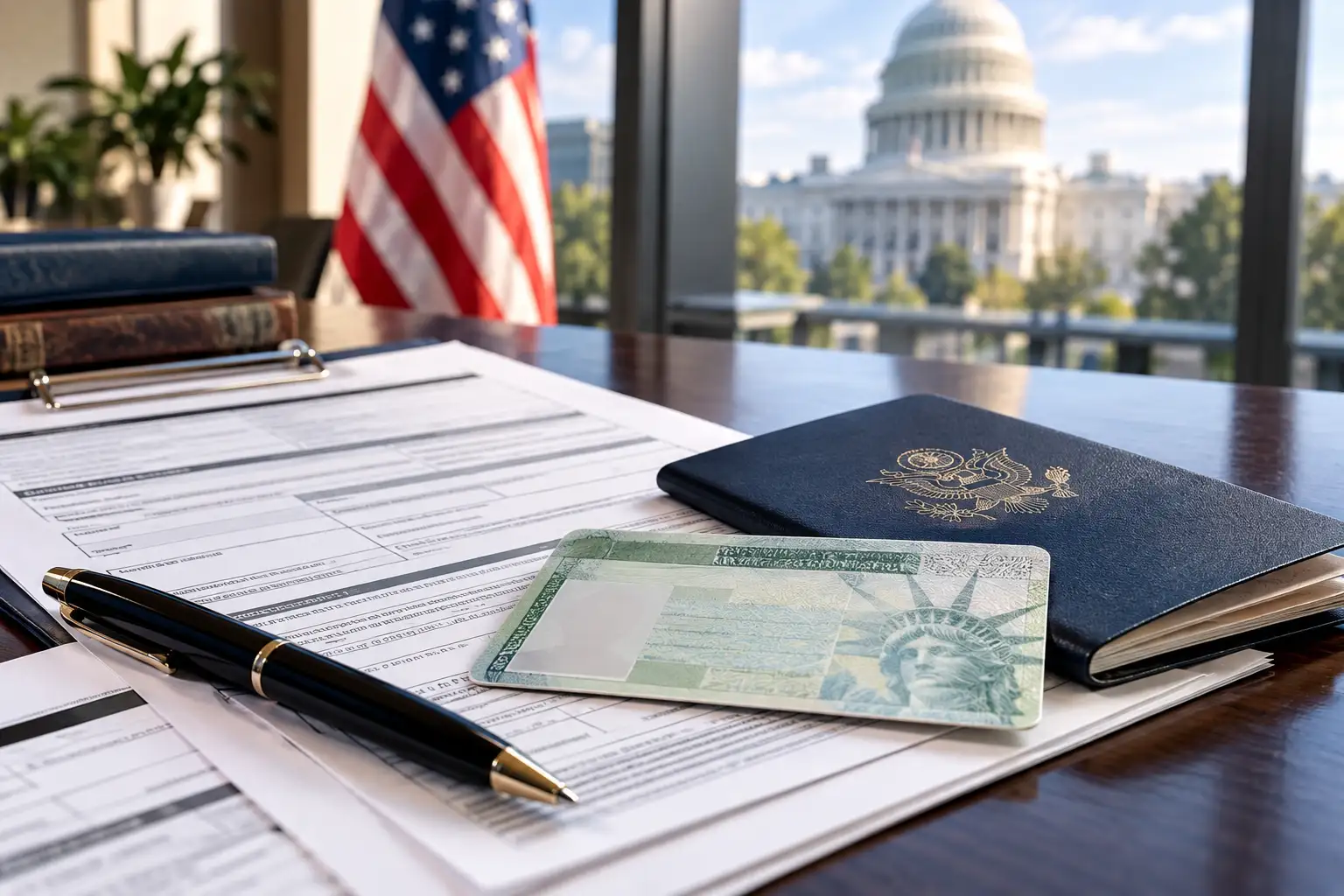
Immigrant visa applicant reviewing passport and U.S. immigration documents
Affected applicants should keep their documents ready and follow official instructions from the relevant U.S. authorities.

If your immigrant visa case was affected by the 75-country suspension, there is no reason to panic and no need to submit a completely new immigration case simply because of this court ruling.

Instead, start with the following checklist.

1. Check the status of your existing case

Look at the latest communication from the National Visa Center, U.S. embassy or U.S. consulate handling your case. Keep your case number, interview information and previous correspondence together.

2. Do not assume that an old refusal means your case is permanently finished

If the refusal happened solely because of the 75-country suspension, the court's decision may change what happens next. Keep copies of the refusal notice and any communication explaining why the visa was not issued.

3. Watch for instructions from the embassy or consulate

Embassies may provide updated instructions as the government implements the court's decision. Applicants should follow the instructions attached to their individual case rather than relying only on social media posts or online discussions.

4. Keep your documents current

Passports, police certificates, medical examinations, financial documents and other immigration records can have expiration dates. Check your documents now so you are ready if the consulate asks you to continue processing.

5. Do not pay someone simply because they promise a guaranteed visa

Major immigration announcements often create opportunities for scammers. Nobody can legitimately guarantee that a person will receive a U.S. immigrant visa simply because a court has changed an immigration policy.

Be particularly careful with anyone demanding large amounts of money in exchange for a supposed “fast-track” appointment, guaranteed approval or special government connection.

What if my interview already happened?

If you already attended your immigrant visa interview and your visa was not issued because of the 75-country suspension, keep all documents connected with that interview.

The court's ruling specifically addresses refusals that were based solely on the policy. That makes these cases particularly important to monitor.

You may not need to start the entire process again. The consulate may instead need to reconsider the case under the normal rules. However, the exact next step can depend on the individual case, the reason listed on the refusal notice and any instructions issued by the consulate.

Do not schedule a new medical examination or pay another major fee unless the responsible U.S. immigration authority or consulate tells you that it is necessary.

What if my family member is waiting in another country?

For families separated by the immigrant visa suspension, the ruling could be particularly significant.

Family-based immigration often involves a long process. A U.S. citizen or permanent resident may spend months or years completing petitions and waiting for a relative's case to reach the interview stage.

A blanket suspension could leave spouses, parents, children and other qualifying relatives waiting even after completing much of the required process.

With the 75-country policy vacated, affected family-based applicants may once again have their cases considered under the ordinary legal framework. But the ruling does not remove normal visa requirements or guarantee immediate family reunification.

Does this ruling help employment-based immigrant visa applicants too?

Potentially, yes.

The policy covered immigrant visa applicants from the listed countries rather than being limited only to family-sponsored cases. That means some employment-based immigrant visa applicants could also be affected.

For example, an applicant who had an approved employment-based immigration petition but could not receive an immigrant visa because of the nationality-based suspension may now have an opportunity for the case to move forward under the normal process.

However, an approved petition by itself does not guarantee visa issuance. Visa availability, eligibility requirements, admissibility and other immigration rules can still apply.

Does this affect tourist visas or student visas?

Not in the same way.

The 75-country policy discussed in this ruling was specifically connected to immigrant visa issuance.

Tourist visas, student visas, exchange visitor visas and other nonimmigrant categories operate under different rules. Separate U.S. entry and visa restrictions can also apply to nationals of certain countries.

This is why applicants should not interpret the court decision as saying that all U.S. visa restrictions for the 75 countries have disappeared.

Simple way to understand it:
The court removed the specific blanket immigrant-visa suspension affecting 75 countries. It did not create automatic visa approval for everyone from those countries, and it did not cancel every other U.S. immigration or travel restriction.

Why this ruling matters beyond the 75 countries

The decision could have importance beyond the people directly affected by the January suspension.

U.S. immigration law gives consular officers a role in evaluating individual visa applicants. The court's reasoning highlights the difference between legitimate individual screening and a blanket policy that treats applicants differently because of nationality.

For future immigration policies, the ruling may serve as an important legal reference when the government attempts to restrict visa processing across an entire group of nationalities.

For applicants, the practical lesson is equally important: immigration rules can change quickly, and a policy that delays a case today may not necessarily determine the final outcome of that case months later.

What should applicants do while waiting for the next update?

The safest approach is simple: keep your case ready.

Make sure your passport is valid, keep your immigration documents organized, respond to official requests, monitor your case and check the website of the U.S. embassy or consulate responsible for your application.

If your case is complicated, especially if you already received a refusal, administrative processing notice or another immigration-related problem, consider speaking with a qualified U.S. immigration attorney before taking a major step.

There is usually little benefit in making rushed decisions immediately after a major court ruling. The better strategy is to understand exactly why your case was delayed and then determine what the new legal situation changes.

What could happen next?

The immediate question is how the U.S. government will respond to the ruling.

The administration could seek an appeal or request a stay while the case is reviewed by a higher court. At the same time, consular posts may need to determine how to handle cases that were previously stopped or refused under the 75-country policy.

That means the situation may continue to develop even after the judge's decision.

For applicants, this is why relying on one headline is not enough. The most useful information will be the official instructions that apply to your specific visa case.

Frequently Asked Questions

Is the U.S. 75-country immigrant visa ban cancelled?

The federal judge vacated the policy that suspended immigrant visa issuance for nationals of 75 countries. However, separate U.S. visa and travel restrictions may still apply to some nationalities and visa categories.

Will everyone from the 75 countries now get a U.S. visa?

No. The ruling removes the blanket suspension, but applicants must still meet the normal requirements for an immigrant visa. Individual eligibility and admissibility rules continue to apply.

Can people whose visas were refused under the policy get another review?

Yes, the court set aside refusals that were based solely on the 75-country policy. Affected applicants should watch for instructions from the relevant U.S. consulate or immigration authority.

Do applicants need to submit a new visa application?

Not automatically. Whether a new application, appointment or additional document is necessary depends on the individual case. Applicants should wait for official instructions before paying new fees or restarting a process.

Does the ruling affect H-1B or other temporary visas?

The court decision concerns the specific immigrant visa suspension covering nationals of 75 countries. It should not be interpreted as a general ruling about H-1B, tourist, student or other nonimmigrant visa programs.

Can the U.S. government appeal the decision?

The government may have options to seek further review. If an appeal or request for a stay changes the practical effect of the ruling, applicants should rely on updated instructions from official U.S. government sources.

The Bottom Line

The federal court's decision is a significant development for people whose U.S. immigrant visa cases were caught by the 75-country suspension.

For affected applicants, the biggest change is that nationality alone can no longer be used as the basis for the blanket policy that the court has now vacated. Cases that were stopped or refused solely because of that policy may have a path back to individual review.

But this is not an automatic visa approval.

The best thing applicants can do now is keep their documents ready, monitor official communications and avoid making expensive decisions based on social media claims or promises from unofficial agents.

U.S. immigration policy remains highly active, and further legal developments could affect how quickly consulates resume normal processing. For anyone waiting on a family-based or employment-based immigrant visa from one of the affected countries, the next official instructions may be just as important as the court ruling itself.

Editorial note: This article is for general informational purposes and is not legal advice. Immigration rules and court proceedings can change. Applicants should verify case-specific instructions with the U.S. Department of State, the relevant U.S. embassy or consulate, or a qualified immigration attorney.

A major development has changed the legal position surrounding the U.S. government's 75-country immigrant visa suspension. A federal judge in New York has struck down the policy, saying that the government went beyond the authority provided under federal immigration law. For families and applicants affected by the suspension, the decision could reopen an important path toward normal case-by-case visa processing.

The ruling is significant, but it is also easy to misunderstand. A court decision removing a visa policy does not mean every affected applicant receives a visa automatically. Instead, the decision changes the legal basis under which certain immigrant visa cases were being stopped and gives affected applicants a reason to expect their cases to be handled under the normal immigration framework.

What happened with the 75-country U.S. visa policy?

Earlier in 2026, the U.S. Department of State introduced a policy that suspended the issuance of immigrant visas to nationals of 75 countries. The government said the measure was connected to concerns that some immigrants could become dependent on public benefits or become a public charge in the United States.

The policy was unusually broad because it applied based on nationality rather than relying only on an individual applicant's circumstances. That became the central issue in the legal challenge.

Applicants can have very different financial situations, family circumstances, employment prospects and immigration histories even when they come from the same country. The lawsuit argued that those individual circumstances could not simply be replaced by a blanket nationality-based restriction.

The case eventually reached U.S. District Judge Jeannette Vargas in the Southern District of New York.

What did the federal judge decide?

On August 21, 2026, Judge Vargas ruled against the policy. The court concluded that the suspension was contrary to law and that Secretary of State Marco Rubio had exceeded the statutory authority available to him.

One of the most important parts of the decision was the court's treatment of nationality-based visa restrictions. The judge found that the policy prevented eligible immigrant visa applicants from receiving visas because of their nationality, rather than allowing the required legal process to determine each person's eligibility.

The ruling also set aside visa refusals that were based solely on the challenged policy. That is particularly important for people whose cases were affected without an independent immigration ground for refusal.

The simple version:
The court did not say that everyone from the 75 countries automatically qualifies for a U.S. immigrant visa. It said the government could not use this particular blanket policy to deny eligible applicants simply because of their nationality.

Why does this decision matter to immigrant families?

For many families, immigration cases are not just paperwork. A delayed immigrant visa can mean spouses remain separated, parents wait longer to join children, and employment-based immigration plans remain uncertain.

The legal challenge included organizations and individuals who said the policy had disrupted family-based and employment-based immigration cases. The court's decision therefore has practical importance beyond the legal question itself.

For applicants who were previously stopped only because of the 75-country policy, the ruling may create an opportunity for their cases to move back into the normal immigration process.

That does not remove every other immigration requirement. Applicants still have to satisfy the rules that normally apply to immigrant visa cases.

Does this mean the U.S. visa ban is completely over?

The answer requires some care.

The specific 75-country immigrant visa policy challenged in this case has been vacated by the federal court. However, immigration law contains many different restrictions, screening requirements and grounds for visa refusal.

The United States may also continue to enforce other immigration or travel policies that are separate from this particular case. Therefore, an applicant should not assume that the court decision removes every possible restriction affecting travel to the United States.

Important: This ruling concerns the challenged immigrant visa policy. It should not be treated as a blanket approval for immigrant visas, tourist visas, student visas or other categories.

What should affected visa applicants do now?

The most sensible approach is not to panic and not to assume that everything will happen automatically. Applicants should first identify exactly how the 75-country policy affected their case.

  1. Check the reason for the previous refusal or pause. If your case was affected specifically because of the 75-country policy, keep copies of the refusal notice, embassy communication and any related correspondence.
  2. Check the current status of your immigrant visa case. Use the appropriate official U.S. government immigration or consular channels rather than relying only on social media posts or unofficial messages.
  3. Keep your documents ready. Passport information, civil documents, financial records, sponsorship documents, police certificates and other case-specific paperwork may still be required.
  4. Do not assume that an old refusal has automatically disappeared from every system. The court has set aside refusals based solely on the challenged policy, but administrative processing may still take time.
  5. Watch for instructions from the embassy or consulate handling your case. If the government provides new guidance or asks an applicant to submit documents again, follow the official instructions carefully.
  6. Consider professional legal advice if your case is complicated. This can be especially useful when a case has multiple refusal grounds, previous immigration issues or other legal complications.

What if my immigrant visa was refused during the 75-country suspension?

This is one of the most important questions after the ruling.

The court's decision specifically addressed refusals that were based solely on the challenged policy. That means affected applicants may have a basis for their cases to be reconsidered under the normal legal framework.

However, reconsideration does not necessarily mean immediate visa issuance. A consular officer may still need to review the applicant's eligibility, documents, admissibility and other requirements.

Applicants should therefore keep their previous refusal documents and avoid assuming that they need to start an entirely new immigration case unless the relevant U.S. government authority tells them to do so.

What about family-based immigrant visas?

Family-based applicants may have particular reasons to pay attention to the ruling. A spouse, parent, child or other qualifying relative can spend a long period waiting for an immigrant visa, and a broad processing suspension can add another layer of uncertainty.

The court case included U.S. citizens who had filed family-based immigration petitions for relatives. The ruling therefore has direct relevance to families whose immigration processing was affected by the challenged policy.

Still, every family-based case has its own requirements. A court ruling removing one policy does not remove the underlying petition, documentation, eligibility or admissibility rules.

What about employment-based immigrant visas?

The decision also matters to some employment-based immigrant visa applicants.

A worker can have an approved immigration petition and still need to complete additional steps before an immigrant visa can be issued. If the 75-country suspension was the only reason the visa process was stopped, the court ruling may allow the case to move forward under the normal process.

Applicants should continue following instructions from the relevant U.S. embassy, consulate or immigration authority and should not make travel or employment decisions solely from headlines about the court ruling.

Does this affect tourist or student visas?

The 75-country policy discussed in this case concerned immigrant visas. That is an important distinction.

A tourist visa, student visa, exchange visitor visa or other nonimmigrant category follows a different legal and administrative process. Therefore, people applying for temporary travel or study should not automatically assume that this ruling changes the requirements for their visa category.

If you are applying for a nonimmigrant visa, continue to follow the instructions for that specific visa category and check current information from the U.S. government before making travel plans.

Could the U.S. government appeal the decision?

Yes. A federal court ruling can become the subject of further legal proceedings, and the government may seek review or other relief.

That is why applicants should distinguish between the court's current ruling and the longer-term outcome of the litigation. Immigration policy can change quickly when a case moves to a higher court or when the government issues new instructions.

For applicants and families, the safest approach is to follow verified government updates rather than treating a single social media post as the final word.

What does this mean for the future of U.S. immigration policy?

The case highlights a larger question in U.S. immigration policy: how far the executive branch can go when changing the way visas are processed.

Governments have significant authority over immigration and national security. At the same time, that authority operates within laws passed by Congress and within the legal procedures that govern visa decisions.

The court's decision shows why immigration policy can become a matter for the judiciary when applicants argue that an administrative policy conflicts with federal law.

For people watching U.S. immigration from outside the country, the broader lesson is simple: a policy announcement and a final legal position are not always the same thing. Court decisions, appeals and government guidance can materially change how a policy operates.

What should applicants watch next?

There are several developments worth watching after this ruling.

  • Whether the U.S. government appeals the decision.
  • Whether a higher court issues any temporary order affecting the ruling.
  • How U.S. embassies and consulates handle previously affected immigrant visa cases.
  • Whether applicants whose visas were refused under the policy receive new instructions.
  • Whether the State Department publishes updated guidance for affected nationalities.

These developments could determine how quickly individual cases begin moving again.

A practical takeaway for affected applicants

If your immigrant visa case was affected by the 75-country suspension, the court ruling is an important development, but patience is still necessary.

Keep your documents organized, save previous communications, check the status of your case through official channels and wait for case-specific instructions where necessary. Avoid paying anyone who promises a guaranteed visa simply because the court has ruled against the policy.

Most importantly, remember that the ruling changes the legal position of the challenged policy; it does not turn the U.S. immigrant visa process into an automatic approval system.

Bottom line:
A federal judge has struck down the Trump administration's 75-country immigrant visa suspension, finding that the policy exceeded the Secretary of State's legal authority and conflicted with federal immigration law. For affected applicants, this is a meaningful development because cases that were blocked solely by the policy may return to normal individual review. The next important step is to see how the U.S. government implements the ruling and whether it seeks further review.

Final Word

Immigration news can be stressful because a single policy change can affect years of planning. The latest ruling offers a significant legal development for people whose immigrant visa cases were caught by the 75-country suspension, but the practical effect will depend on how individual cases are handled after the decision.

For now, affected applicants should focus on what they can control: keeping their records complete, checking official case information, responding to genuine government requests and avoiding unverified claims about guaranteed approvals.

As the situation develops, applicants should continue checking official U.S. government sources for the latest instructions before making financial, employment or travel decisions.

Fact Check & Editorial Information

Author: Chavda Dilavarkumar
Publisher: Finswiftnews
Category: Visa & Immigration
Published: August 23, 2026
Last Updated: August 23, 2026
Fact Checked: August 23, 2026
Editorial Review: Finswiftnews
Primary Sources: U.S. federal court proceedings and ruling, U.S. Department of State information, Associated Press/NPR reporting, Reuters reporting, and other publicly available reliable information relevant to the case.

This article has been prepared after reviewing publicly available information, official announcements, government publications, industry reports, and other reliable sources available at the time of publication. While we strive to provide accurate, balanced, and easy-to-understand information, some details may change as new verified information becomes available. This article may be updated to reflect significant developments when appropriate.

About the Author

Chavda Dilavarkumar is the founder and editor of Finswiftnews, an independent digital publication covering global finance, precious metals, artificial intelligence, technology, cryptocurrency, U.S. news, immigration, and consumer topics. Articles are researched using publicly available information, official announcements, government publications, and other reliable sources available at the time of publication.

Sources & Further Reading

U.S. Federal Court: Southern District of New York court proceedings and ruling concerning the 75-country immigrant visa policy.

U.S. Department of State: Public information and immigration visa guidance concerning immigrant visa processing and the challenged policy.

Reuters: Reporting on the federal court decision and its legal implications for the 75-country immigrant visa suspension.

Associated Press / NPR: Reporting on the ruling, the affected applicants and the government's position.

Readers should rely on official U.S. government sources for case-specific immigration instructions. News reports and this article are intended to provide general information and context.

Universal Disclaimer

Disclaimer: The information published on Finswiftnews is provided for educational, informational, and news reporting purposes only. While we strive to use reliable and publicly available sources, we do not guarantee that all information is complete, accurate, or up to date. Readers should verify important information through official sources before making any financial, legal, immigration, tax, or other important decisions. Finswiftnews and the author are not responsible for any loss or damages resulting from the use of, or reliance on, the information published on this website.

Scan to share instantly:

QR Code

Global Currency & Forex Market: Live Exchange Rates, Dollar Index & Key Market Trends

Global currency and forex market with live exchange rates

 Global currency and forex market overview with major exchange rates and the U.S. Dollar Index.


Global Currency & Forex Market Tracker

Track the latest available market data for major currencies, the U.S. Dollar Index and selected foreign-exchange pairs.

Note: Market data is provided through TradingView. Data availability and timing may vary by instrument and data source.

Currencies move constantly across international borders, shaping everything from cross-border trade balances and international travel costs to global investments. For everyday readers, understanding these currency shifts helps make sense of changing economic landscapes without getting lost in complex jargon.

Why Currency Markets Never Sleep

The foreign exchange market operates 24 hours a day, five days a week across major global financial centers. Unlike traditional stock exchanges that close in the evening, the Forex ecosystem keeps running as international trade demands, corporate needs, and global capital flows react to breaking news and economic developments.

How to Read the Currency Tracker

Forex Market – Global Currencies & Exchange Rates
Global forex market overview showing major currencies, exchange rates and currency market trends.

When looking at live currency trackers, it helps to understand what each benchmark actually represents for everyday economic conditions:

  • DXY (U.S. Dollar Index): Measures the strength of the U.S. dollar against a basket of major international currencies.
  • USD/INR: Shows how many Indian rupees are required to purchase one U.S. dollar. For example, if USD/INR rises, it generally means one U.S. dollar has grown worth more Indian rupees than before.
  • EUR/USD: Shows the relative value of the euro compared to the U.S. dollar.
  • GBP/USD: Shows the relative value of the British pound compared to the U.S. dollar.

Practical Impact: Why This Matters to You

For everyday readers, one of the easiest ways to understand currency movements is to look at how major pairs interact with real-world expenses. Changes in the dollar and other exchange rates can affect import costs, international travel budgets, overseas remittances, and the prices of globally traded commodities.

What Can Move Exchange Rates?

Exchange rates can be influenced by a wide range of macroeconomic and global factors:

  • Central Bank Monetary Policy: Decisions by major central banks on interest rates and monetary policy can significantly influence currency demand and exchange rates.
  • Inflation Trends: Economies maintaining lower, more stable inflation rates often see their currencies appreciate relative to economies experiencing higher inflation.
  • Geopolitical Sentiment: Global events, trade agreements, and political shifts regularly sway investor confidence, driving capital toward stable or emerging assets.

Understanding Short-Term Market Volatility

Because foreign exchange rates fluctuate based on countless variables, anticipating short-term direction is challenging even for experts. Focusing on broader structural trends rather than reacting impulsively to intraday price swings allows you to stay informed of practical economic movements as they unfold.

Frequently Asked Questions (FAQs)

Q: Why do currency exchange rates fluctuate continuously?
A: Exchange rates change because currencies trade actively on global open markets every business day. Supply and demand shift dynamically based on economic data releases, news headlines, and changing investor expectations.

Q: How does the U.S. Dollar Index (DXY) impact other markets?
A: The DXY provides a useful macro-level view of the U.S. dollar's strength relative to major currencies and can help readers put broader currency movements into context.

Q: How can I stay updated on shifting currency conditions?
A: Using integrated real-time tracking widgets and following clear macroeconomic summaries can help you access the latest available market data and practical insights.


Editorial Information

  • Author: Chavda Dilavarkumar
  • Publisher: Finswiftnews
  • Category: Global Finance
  • Published: August 18, 2026
  • Last Updated: August 18, 2026
  • Editorial Review: Chavda Dilavarkumar, Finswiftnews
  • Primary Source: TradingView market data used in the embedded market tracker.

About the Author:
Chavda Dilavarkumar is the publisher and digital media content creator behind Finswiftnews, covering global finance, currencies, commodities and international economic developments.

Disclaimer:
The information provided in this article is for educational and informational purposes only and does not constitute financial or investment advice. Currency markets carry inherent risks, and readers should conduct their own independent research or consult with a qualified financial advisor before making any financial decisions.

Scan to share instantly:

QR Code

Gold and Silver Explained: What Moves Precious Metal Prices and How to Read the Market

Gold and silver bullion with global financial market charts
Gold and silver markets are influenced by global economic conditions, interest rates, currencies and industrial demand.

Gold & Silver Market Tracker

Track the latest available market data for gold and silver in USD per troy ounce.

Note: Market data is provided through TradingView. Data availability and timing may vary by instrument and data source.

Market Data Note: The tracker displays market information provided through TradingView. Data availability and timing may vary by instrument.

Gold & Silver Prices Explained

Watch this short video to understand the key global factors that can influence gold and silver prices.

Video: Finswiftnews · Educational content for global investors and NRI readers.

As currencies, bond yields and equity markets respond to changing economic conditions, gold and silver remain closely watched by investors assessing monetary policy, market sentiment and broader financial trends.

Recent movements in precious-metal markets have attracted renewed attention as investors assess what changing economic conditions could mean for gold and silver. Examining these developments through a broader economic lens helps explain market shifts without relying on short-term speculation or emotional trading.

Key Takeaways

  • Gold and silver serve as key indicators for investors monitoring changing monetary policy, market sentiment, and broader financial trends.
  • Gold is widely viewed as a traditional safe-haven asset during times of macroeconomic uncertainty and geopolitical tension.
  • Silver maintains a dual identity, combining traditional precious metal tracking with critical industrial applications across electronics and green energy.
  • Valuations are shaped by multiple factors, including interest rate expectations, currency fluctuations, and central bank demand.

Gold Market Update

Featured Resource for Asset Management

For readers organizing physical asset collections or looking for reliable home storage and verification accessories, exploring verified marketplace options can help protect your long-term value.

πŸ‘‰ Check Recommended Asset Protection & Storage Tool on Amazon

Disclosure: As an Amazon Associate, Finswiftnews earns from qualifying purchases at no additional cost to you.

Gold is widely viewed as a traditional safe-haven asset, particularly during periods of macroeconomic uncertainty and geopolitical tension. Price action across international exchanges frequently responds to shifting expectations surrounding real interest rates, central bank reserve management, and the relative strength of major global reserve currencies.

Silver Market Update

Silver maintains a dual identity in the global financial system, functioning simultaneously as a precious monetary asset and a critical industrial raw material. While it tracks closely with gold during broader market shifts, silver also experiences distinct demand cycles driven by electronics, manufacturing, and photovoltaic solar technologies. Industrial users continuously monitor material efficiency and substitution options as input costs evolve.

Silver industrial uses in solar technology electronics and global markets
Silver plays an important role in industrial applications including electronics, solar technology and modern manufacturing.


What Is Driving Precious Metals?

Gold and silver market analysis with global financial trends
Gold and silver prices are influenced by interest rates, currencies, investment demand and broader global economic conditions.

Valuations in the precious metals sector are rarely dictated by a single variable. Market observers typically look at a combination of macroeconomic pillars:

  • Central Bank Monetary Policy: Adjustments to interest rates and liquidity measures alter the opportunity cost of holding non-yielding physical commodities.
  • Currency Index Fluctuations: The relative performance of major fiat currencies influences how globally traded commodities are priced across different regions.
  • Central Bank and Industrial Demand: Central-bank buying and industrial consumption can influence the longer-term balance between supply and demand.
How to Read Gold & Silver Prices: A daily price movement should be viewed together with broader underlying factors such as interest-rate expectations, currency movements, investment demand, and industrial consumption. Evaluating these elements collectively provides a clearer perspective than reacting to a single market session.

What Should Readers Watch Next?

For anyone following gold and silver, the most useful approach is to look beyond a single day's price movement. Watch changes in interest-rate expectations, major currency movements, central-bank activity, investment demand and industrial consumption together. These factors can provide a clearer picture than reacting to one market session.

Practical Takeaway: Before reacting to a sharp move in gold or silver, check whether the move is supported by broader changes in monetary policy, currencies, investment flows or industrial demand.

Global Market Outlook

The outlook will depend on how monetary policy, industrial demand and broader market conditions develop in the months ahead.

Frequently Asked Questions (FAQ)

Q: How are gold and silver prices presented in the market tracker?
A: The tracker displays gold and silver market data in USD per troy ounce through TradingView. Data availability and timing may vary by instrument and data source.
Q: Why do precious metal prices fluctuate throughout the day?
A: Intraday price movements respond dynamically to market data updates, currency fluctuations, trading volume, and shifts in short-term market sentiment.
Q: Does silver rely entirely on investment demand?
A: No. Unlike gold, which is held primarily for monetary and investment purposes, silver has extensive industrial applications in electronics, automotive components, and green energy infrastructure.

Sources & Fact Check

Market data displayed in the tracker is provided through TradingView. Background information in this article should be verified against relevant official and industry sources before making financial decisions.

Market Data: TradingView

Editorial Note:
Author: Chavda Dilavarkumar
Publisher: Finswiftnews
Category: Global Finance & Gold & Silver
Published: August 12, 2026
Reviewed for factual accuracy: August 12, 2026
Editorial Review: Finswiftnews

About the Author:
Chavda Dilavarkumar is the owner and publisher of Finswiftnews, an independent digital publication covering global finance, precious metals, and consumer topics based on publicly available information and reliable sources.

Disclaimer:
This article is provided for general informational and educational purposes only and does not constitute financial, investment, tax or legal advice. Readers should verify important information through official sources before making any financial decisions. Finswiftnews and the author are not responsible for any loss or damages resulting from the use of, or reliance on, the information published on this website.
Scan to share instantly:

QR Code

Australia Business Visa Guide: Requirements, Costs, Documents & How to Apply

Australia Business Visa Process Guide – Requirements, Documents and Visa Options

 Australia Business Visa Guide: Understand the application process, key requirements, documents and available pathways before applying.


Reading time: 10 minutes
Last Updated: August 6, 2026

Australia remains one of the world's most important destinations for international business travel, trade meetings, conferences and commercial opportunities. But the phrase “Australia business visa” can be confusing because there is no single visa that covers every type of business activity.

If you are travelling to Australia for a short business visit, the Visitor visa (subclass 600) Business Visitor stream may be relevant. If your goal is to work in Australia, operate a business long term, invest, or migrate permanently, a different visa pathway may be required.

This guide explains the difference in simple terms, including what business visitors can do, what they cannot do, the documents applicants may need, current costs, common mistakes and what happened to Australia's former Business Innovation and Investment Program.

Key Takeaways

  • Subclass 600 Business Visitor stream is designed for eligible short-term business visits.
  • Business visitors can undertake activities such as making business enquiries, negotiating contracts and attending certain conferences or trade fairs.
  • You cannot use the Business Visitor stream to work for an Australian business or sell goods or services directly to the public.
  • The current visa application charge is AUD 250, subject to applicable concessions and future changes.
  • A typical stay under the Business Visitor stream is up to 3 months.
  • The former Business Innovation and Investment Program, including subclass 188 streams, is closed to new applications.
  • Long-term business owners should not assume that a short-term Business Visitor visa provides a pathway to operate a business or work in Australia.

What Is an Australia Business Visa?

People often search for an “Australia business visa”, but that phrase can describe very different travel goals.

Someone attending a three-day conference has very different immigration needs from someone planning to relocate to Australia and run a company.

For short-term business visitor activities, one of the main options is the Visitor visa (subclass 600) Business Visitor stream.

This stream is intended for genuine visitors travelling to Australia for permitted business visitor activities. Applicants must generally be outside Australia when applying and when the visa decision is made.

Quick Answer

If you only want to attend meetings, investigate business opportunities, negotiate contracts or participate in eligible conferences, the Business Visitor stream may be relevant.

If you intend to perform paid work, provide services to an Australian organisation, sell directly to the public or relocate to operate a business, you should investigate a visa that specifically permits those activities.

What Can You Do on a Subclass 600 Business Visitor Visa?

Australia's Department of Home Affairs lists several activities that can fall within permitted business visitor activity.

Australia Business Visa Subclass 600 Business Visitor guide for meetings, conferences and business activities

Australia Subclass 600 Business Visitor stream is designed for eligible short-term business activities such as meetings, conferences, contract negotiations and business enquiries.

Depending on your circumstances, these can include:

  • Making general business or employment enquiries.
  • Investigating a business opportunity.
  • Negotiating, entering into or reviewing a business contract.
  • Conducting activities as part of an official government visit.
  • Taking part in a conference, trade fair or seminar, provided you are not being paid by the organisers to participate.
  • Undertaking tourist activities during your visit.

This makes the stream useful for international entrepreneurs, executives, company representatives and professionals who need to visit Australia temporarily for legitimate business-related purposes.

What Can You NOT Do?

This is where applicants need to be particularly careful.

A business visitor visa is not the same as an Australian work visa.

Important Restriction

Under the Business Visitor stream, you cannot work for or provide services to a business or organisation based in Australia. You also cannot sell goods or services directly to the Australian public.

For example, attending negotiations about a future contract may qualify as a business visitor activity. Actually carrying out ongoing work for an Australian company may require a different visa.

The exact visa required depends on what you intend to do, how long you intend to stay and your individual circumstances.

Australia Business Visitor Visa Cost

As of August 2026, the Department of Home Affairs lists the Visitor visa (subclass 600) Business Visitor stream visa application charge at AUD 250, with concessions applying in limited circumstances.

From 1 July 2026, a lower visa cost may apply to eligible citizens of specified Pacific Island countries and Timor-Leste who lodge a valid application.

Applicants should remember that the visa application charge may not be their only expense. Depending on individual circumstances, additional costs can arise during a visa application.

Always Check the Current Fee

Australian visa charges can change. Before paying or lodging an application, check the current amount using the official Department of Home Affairs visa pricing information or Visa Pricing Estimator.

How Long Can You Stay?

The Business Visitor stream is designed for short visits.

Home Affairs currently lists a stay of up to 3 months for this stream. In general, a stay period of three months may be granted, although the exact visa conditions and permitted travel period are determined by the Department.

A visa may allow single or multiple entry depending on the grant.

Always read your individual visa grant notice rather than assuming another traveller's conditions apply to you.

Australia Business Visitor Visa Requirements

There is no single document list that guarantees approval for every applicant. Visa decisions are based on individual circumstances.

However, applicants should generally be prepared to demonstrate who they are, why they are travelling, how the trip will be funded and why the visit is genuinely temporary.

1. Valid Identity Documents

You will need appropriate identity documentation, normally including your passport and any other identity evidence requested during the application process.

2. Evidence of Your Business Purpose

Your documents should help explain why you need to travel to Australia.

Depending on the trip, useful supporting evidence could include:

  • Business invitation letters.
  • Conference or trade-fair registration.
  • Meeting schedules.
  • Business correspondence.
  • Information about the companies involved.
  • Contract discussions or other evidence supporting the stated purpose of travel.

3. Evidence of Sufficient Funds

Applicants may need to show they have enough money to support themselves during their stay and leave Australia.

Relevant financial evidence can include bank statements, payslips, tax records or other appropriate financial documents depending on the applicant's circumstances.

4. Evidence That You Are a Genuine Visitor

The Department needs to be satisfied that you are genuinely travelling temporarily for an appropriate purpose.

Evidence of employment, business responsibilities, family commitments, financial circumstances or other ties outside Australia may help explain your circumstances.

Step-by-Step: How to Apply

Australia Business Visa application process showing eligibility, required documents, ImmiAccount and step-by-step application guide

Australia Business Visa application process: check eligibility, prepare supporting documents, lodge the application, pay the applicable fee and track the visa decision.

Application Process

  1. Confirm your purpose: Make sure your intended activities fit the Business Visitor stream.
  2. Check eligibility: Review the latest requirements on the Department of Home Affairs website.
  3. Prepare your documents: Gather identity, financial and business-purpose evidence relevant to your trip.
  4. Use ImmiAccount: Australian visa applications are generally managed online through the government's immigration system.
  5. Complete the application carefully: Make sure names, passport details, dates and travel information are accurate.
  6. Upload supporting evidence: Provide documents that support the claims made in your application.
  7. Pay the applicable charge: Confirm the current fee before payment.
  8. Respond to requests: If the Department asks for further information, respond according to the instructions and deadline provided.
  9. Wait for a decision: Do not assume approval simply because an application has been submitted.
  10. Check your grant conditions: If approved, read the visa grant notice carefully before travelling.

How Long Does Processing Take?

There is no single processing time that every Business Visitor application will follow.

Processing can depend on application volumes, individual circumstances, whether additional checks are required and whether the application contains all necessary information.

The Department of Home Affairs provides a visa processing time guide based on recently decided applications. Those figures are a guide rather than a guarantee for an individual applicant.

If your trip involves a fixed conference or important business meeting, applying early can reduce unnecessary last-minute pressure.

Common Problems and Practical Solutions

Problem: My Business Purpose Is Not Clear

A vague statement such as “business trip” may not explain what you will actually be doing.

Practical approach: Provide a clear itinerary and relevant supporting documents showing the purpose of meetings, conferences, negotiations or other permitted activities.

Problem: My Financial Documents Do Not Match My Application

Inconsistencies can create unnecessary questions.

Practical approach: Check names, dates, income information, bank statements and sponsorship details before submission.

Problem: I Want to Work While Visiting

The Business Visitor stream does not permit normal work for an Australian business or organisation.

Practical approach: Investigate an appropriate work visa before travelling rather than attempting to use a visitor visa for activities it does not permit.

Problem: I Want to Stay Longer

The Business Visitor stream is designed for temporary visits and cannot simply be treated as a long-term business residence visa.

Practical approach: Explore the visa options that match your actual long-term purpose before making commitments in Australia.

Problem: My Documents Are Not in English

If supporting documents are not in English, follow the Department's current translation requirements when preparing your application.

Do not rely on informal or incomplete translations when official supporting evidence is required.

What Happened to Australia's Subclass 188 Business Visa?

This is an important update because older articles and videos can still create confusion.

Australia Business Visa update showing Subclass 188 closed to new applications and alternative migration pathways

Australia's Business Innovation and Investment Program, including Subclass 188, is closed to new applications. Applicants should check current official visa pathways that match their circumstances.

Australia's Business Innovation and Investment Program (BIIP) closed permanently to new applications on 31 July 2024.

This included major subclass 188 streams such as Business Innovation, Investor, Significant Investor and Entrepreneur pathways.

Applications lodged before the closure can still be processed under the applicable arrangements, but new applicants should not assume that the old subclass 188 pathway remains open.

Do Not Rely on Old “Investor Visa” Guides

If you find a website or video telling you to submit a new subclass 188 application today, check its publication date. Australia's former Business Innovation and Investment Program is closed to new applications.

What If You Want to Run a Business in Australia Long Term?

This is where the difference between business travel and business migration becomes crucial.

There is no reason to assume that every entrepreneur will qualify for one particular replacement visa simply because subclass 188 closed.

Your potential pathway can depend on factors such as your occupation, skills, professional achievements, employer sponsorship, state or territory requirements, family circumstances and other eligibility criteria.

For that reason, someone planning a permanent or long-term move should use Australia's official visa exploration tools and assess the pathway that matches their individual circumstances.

A short-term Business Visitor visa should not be presented as a substitute for a visa that permits work, residence or long-term business operations.

Business Visitor Visa vs Long-Term Migration

Question Business Visitor Stream Long-Term Migration
Primary purpose Temporary business visitor activities Work, residence or other longer-term purposes
Business meetings Generally permitted when within business visitor rules Depends on visa
Contract negotiations Permitted business visitor activity Depends on visa
Work for an Australian organisation No Requires an appropriate visa with work rights
Sell directly to the public No Depends on immigration and other applicable rules
Permanent residence No Possible only through an eligible pathway

Can You Bring Family Members?

Family members cannot simply be included in one Business Visitor stream application.

Each family member, including children, generally needs to submit a separate visa application if they need a Visitor visa.

Families travelling together should therefore check the requirements for every traveller individually.

Can a Business Visitor Visa Lead to Permanent Residence?

The Business Visitor stream itself is a temporary visitor pathway. It should not be treated as a direct permanent-residence visa.

If your long-term goal is to live and work in Australia, investigate the visa pathways available for your qualifications and circumstances separately.

Tips Before You Submit Your Application

  • Use the same spelling of your name across all documents.
  • Check your passport number carefully.
  • Explain your business purpose clearly.
  • Provide supporting evidence that matches your stated itinerary.
  • Do not describe planned work as a “business meeting” if the actual activity involves providing services or working for an Australian organisation.
  • Keep copies of the documents you submit.
  • Check current visa fees before payment.
  • Review the latest Home Affairs guidance before booking non-refundable travel.
  • Read your visa grant notice and conditions carefully if your application is approved.

Frequently Asked Questions — Australia Business Visa

Australia Business Visa FAQ

1. Is there an Australia business visa?
For short-term eligible business activities, the Visitor visa (subclass 600) Business Visitor stream is one relevant option. Other purposes may require different visas.

2. How much does the Subclass 600 Business Visitor stream cost?
As of August 2026, the listed visa application charge is AUD 250, with concessions applying in limited circumstances. Always verify the current fee before applying.

3. How long can I stay in Australia?
The Business Visitor stream generally allows a stay of up to three months, subject to the visa granted in your individual case.

4. Can I work in Australia on this visa?
No. Business visitors cannot work for or provide services to a business or organisation based in Australia.

5. Can I attend a business conference?
Eligible business visitors can participate in a conference, trade fair or seminar, but they cannot be paid by the organisers to participate.

6. Can I negotiate a business contract?
Yes. Investigating, negotiating, entering into or reviewing a business contract is among the listed business visitor activities.

7. Can I sell products directly to customers?
No. The Business Visitor stream does not permit selling goods or services directly to the public.

8. Is Subclass 188 still open?
No. The Business Innovation and Investment Program closed permanently to new applications on 31 July 2024.

9. Can I include my family in my application?
Family members cannot be included in the same Business Visitor application. Each person who requires a visa needs a separate application.

10. Does a Business Visitor visa guarantee entry into Australia?
A visa allows you to travel for the purpose and under the conditions for which it was granted, but travellers must continue to comply with Australian border and visa requirements.

11. Should I buy flights before my visa is approved?
Consider the financial risk of making non-refundable travel commitments before a visa decision. Follow current Home Affairs guidance when planning your trip.

12. Where should I check the latest rules?
Use the Australian Department of Home Affairs website for current visa requirements, fees, processing guidance and official application information.

Final Takeaway

The most important thing to understand about an “Australia business visa” is that your intended activity determines the type of permission you may need.

For a short trip involving meetings, business enquiries, contract negotiations or eligible conferences, the Visitor visa (subclass 600) Business Visitor stream may be appropriate if you meet the requirements.

But it does not give you unrestricted permission to work, provide services to an Australian organisation or sell directly to the public.

And if you are planning to relocate and operate a business long term, do not rely on outdated information about the former subclass 188 program. The Business Innovation and Investment Program is closed to new applications.

Before applying, check your exact purpose, prepare evidence that clearly supports your trip and verify the latest requirements directly with Australia's Department of Home Affairs.

Editorial Note

This article is intended to provide clear, practical and accessible information about Australian business visitor visa options and related immigration pathways. Immigration rules, visa charges, eligibility requirements and processing arrangements can change over time.

Finswiftnews aims to distinguish short-term business visitor activities from work, investment and long-term migration pathways so readers can better understand which official information may be relevant to their circumstances. Readers should always verify current requirements with the Australian Department of Home Affairs before applying or making travel or financial commitments.

Fact Check & Editorial Information

Author Chavda Dilavarkumar
Publisher Finswiftnews
Category Visa & Immigration
Published August 6, 2026
Last Updated August 7, 2026
Fact Checked August 7, 2026
Editorial Review Finswiftnews
Primary Sources Australian Department of Home Affairs official visa guidance, Australian Government immigration information, official visa pricing and processing guidance, government announcements and other publicly available authoritative information relevant to Australian immigration and business travel.

About the Author

Chavda Dilavarkumar is the author and publisher behind Finswiftnews, where he researches and explains topics related to global immigration, international travel, business, finance and policy updates. His articles focus on presenting complex information in a clear, practical format for an international audience.

Articles are prepared using publicly available information and authoritative sources, with important rules and figures reviewed against relevant primary sources where available.

Disclaimer

This article is provided for general informational and educational purposes only. It does not constitute legal, immigration, financial or professional advice.

Visa eligibility, fees, processing times, permitted activities and immigration requirements can change and may vary according to nationality, personal circumstances and the visa pathway involved. Information in this article should therefore not be treated as a guarantee of visa approval or immigration outcome.

Before submitting an application, making payments, booking non-refundable travel or making immigration-related decisions, readers should verify the latest requirements directly with the Australian Department of Home Affairs or seek advice from an appropriately qualified professional where necessary.

Scan to share instantly:

QR Code

US Dollar Index (DXY), USD/INR & USD/JPY: Global Forex Market Update and Currency Guide

Global currency markets dashboard showing the US Dollar Index (DXY), USD/JPY, USD/INR, EUR/USD and GBP/USD with live forex market analysis.

Live snapshot of the global foreign exchange market highlighting the US Dollar Index (DXY), USD/INR, USD/JPY, EUR/USD and GBP/USD. Data is for informational purposes and market conditions may change
Currencies & Global Finance

Published by Chavda Dilavarkumar Manilal | Finswiftnews | Market Snapshot: August 2026 (Reference Data) | Global Coverage

Fact Check & Editorial Information

  • Author: Chavda Dilavarkumar
  • Publisher: Finswiftnews
  • Category: Currencies & Global Finance
  • Published: August 3, 2026
  • Last Updated: August 3, 2026
  • Fact Checked: August 3, 2026
  • Editorial Review: Finswiftnews
  • Primary Sources: TradingView market data, official central bank publications (Federal Reserve, European Central Bank, Bank of Japan), and verified international foreign exchange market information.

Global foreign exchange markets continue to navigate shifting macroeconomic landscapes, interest rate adjustments, and evolving central bank policies. In the market snapshot referenced in this report, the US Dollar Index (DXY) was shown at 99.456, reflecting a modest intraday adjustment of -0.07%. Understanding currency dynamics is critical for international traders, multinational corporations, and long-term investors monitoring global liquidity and purchasing power parity.

πŸŽ₯ Watch Video Guide

Prefer watching instead of reading?

Watch our complete guide explaining DXY, USD/INR, USD/JPY, interest rates, inflation, and the key factors driving global currency markets.

Real-Time Global Currency & Forex Tracker

Tip: Rotate your phone to landscape mode for a full view. Use the search/tab icons to track different global currency pairs.

Note: Foreign exchange rates fluctuate dynamically based on live market liquidity.
Disclaimer: Financial markets involve risk. Data is for educational and informational purposes only. Do your own research (DYOR).

Live Forex Chart: USD/JPY

The live chart below displays the USD/JPY exchange rate, while the market snapshot above highlights additional major currency benchmarks including DXY, USD/INR, EUR/USD and GBP/USD.

Market Performance Breakdown: Major Currency Benchmarks

Reviewing the real-time global currency tracker, key exchange rates display distinct movement patterns across major economic corridors:

  • US Dollar Index (DXY): 99.456 (-0.07%), tracking the greenback's strength against a basket of major world currencies.
  • USD/INR: 95.3900 (+0.01%), reflecting relative stability in the exchange corridor between the US Dollar and the Indian Rupee.
  • EUR/USD: 1.15309 (+0.03%), indicating slight upward momentum for the Euro against the dollar.
  • GBP/USD: 1.34649 (-0.07%), showing minor downward pressure on the British Pound in current trading sessions.

Why USD/INR Matters for Global Investors

Currency corridors play a vital role for various participants interacting across international borders. Specifically, tracking the USD/INR pair is essential for:

  • NRIs: Managing remittances, investments, and asset conversions between international jurisdictions and India.
  • International students: Budgeting for tuition fees, living expenses, and foreign exchange conversions.
  • Importers: Calculating raw material acquisition costs and planning procurement budgets.
  • Exporters: Forecasting revenue realizations and managing foreign exchange hedging.
  • Travelers: Securing foreign exchange for overseas trips and tourism.
  • Freelancers: Evaluating cross-border project earnings and payout conversions.
USD/INR infographic explaining how US dollar strength, interest rates, crude oil prices, foreign fund flows, inflation and RBI policy influence the Indian rupee.
Key global and domestic factors that influence the USD/INR exchange rate and the value of the Indian rupee.

Global Investor Guide: Navigating Forex Volatility

Foreign exchange markets are heavily influenced by geopolitical events, inflation data, and interest rate differentials. Here are general considerations and risk management principles for market participants:

✅ General Considerations

  • Monitor Central Bank Policies: Keep track of rate announcements from major institutions like the Fed, ECB, and BOJ.
  • Diversify Risk: Avoid overexposure to a single currency pair during high-impact macroeconomic data releases.
  • Analyze Economic Calendars: Align your market review with employment reports, inflation prints, and GDP updates.

❌ Risks and Mistakes to Avoid

  • Over-Leveraging: High leverage in currency trading can quickly magnify losses during sudden market shifts.
  • Ignoring Geopolitical Tensions: Disregarding international news can lead to unexpected portfolio shocks.
  • Trading Without a Plan: Entering positions without predefined risk management or stop-loss strategies.

Evergreen Guide: Why Currency Markets Drive the Global Economy

Global currency markets dashboard showing the US Dollar Index (DXY), USD/JPY, USD/INR, EUR/USD and GBP/USD with live forex market analysis.
Illustration of the global foreign exchange market highlighting major currency pairs including DXY, USD/JPY, USD/INR, EUR/USD and GBP/USD. Used for educational and market analysis purposes.
The foreign exchange market is the largest and most liquid financial market in the world, operating continuously across global financial hubs. Understanding currency valuation helps investors interpret international trade balances, inflation trends, and cross-border investment flows.

1. The Role of Interest Rate Differentials

Central bank interest rates dictate the yield attractiveness of a currency. When a nation raises rates to combat inflation, its currency often strengthens as global capital flows toward higher yields.

2. Purchasing Power and Global Trade

Exchange rate fluctuations directly impact import and export costs for nations worldwide, influencing corporate profit margins, commodity pricing, and consumer inflation levels.

USD/INR infographic showing how dollar strength, interest rates, crude oil, foreign fund flows, global risk sentiment and RBI policy affect the Indian rupee.
Global and domestic factors influencing USD/INR, including DXY, interest rates, crude oil prices, foreign investment flows and RBI policy.

Frequently Asked Questions (FAQ)

What is DXY?

DXY (US Dollar Index) is a measure of the value of the United States dollar relative to a basket of foreign currencies, primarily used by traders to gauge greenback strength globally.

Why does USD/INR change every day?

USD/INR fluctuates due to continuous market supply and demand dynamics, inflation rate differences, economic data releases, geopolitical developments, and capital flows between foreign investors and local markets.

How do central bank decisions affect currency markets?

Central banks influence currency values primarily through monetary policy decisions, such as adjusting benchmark interest rates or implementing quantitative easing/tightening, which directly impact capital returns and investor confidence.

Final Thoughts for Market Participants

Short-term currency fluctuations are a natural feature of global trade. Investors and analysts may consider broader macroeconomic conditions, risk tolerance, and personal financial objectives before evaluating market exposure. Continue tracking live feeds and institutional reports to stay informed on international finance trends.

This article is periodically reviewed and updated to maintain factual accuracy and relevance as market conditions evolve.

About the Author:
Written by Chavda Dilavarkumar for Finswiftnews, specializing in global economic trends, foreign exchange movements, and international financial data analysis.

Transparency & Disclaimer

Editorial Note: This report is for informational purposes only. It is based on publicly available data, including official statistics and verified market analysis. Finswiftnews maintains editorial independence to ensure objective reporting.

Universal Disclaimer: The content provided is for educational purposes and does not constitute financial, investment, or legal advice. Market data is subject to volatility. Readers are encouraged to conduct their own research (DYOR) and consult with a professional advisor before making any financial decisions. Finswiftnews is not liable for any losses arising from the use of this information.

Scan to share instantly:

QR Code