

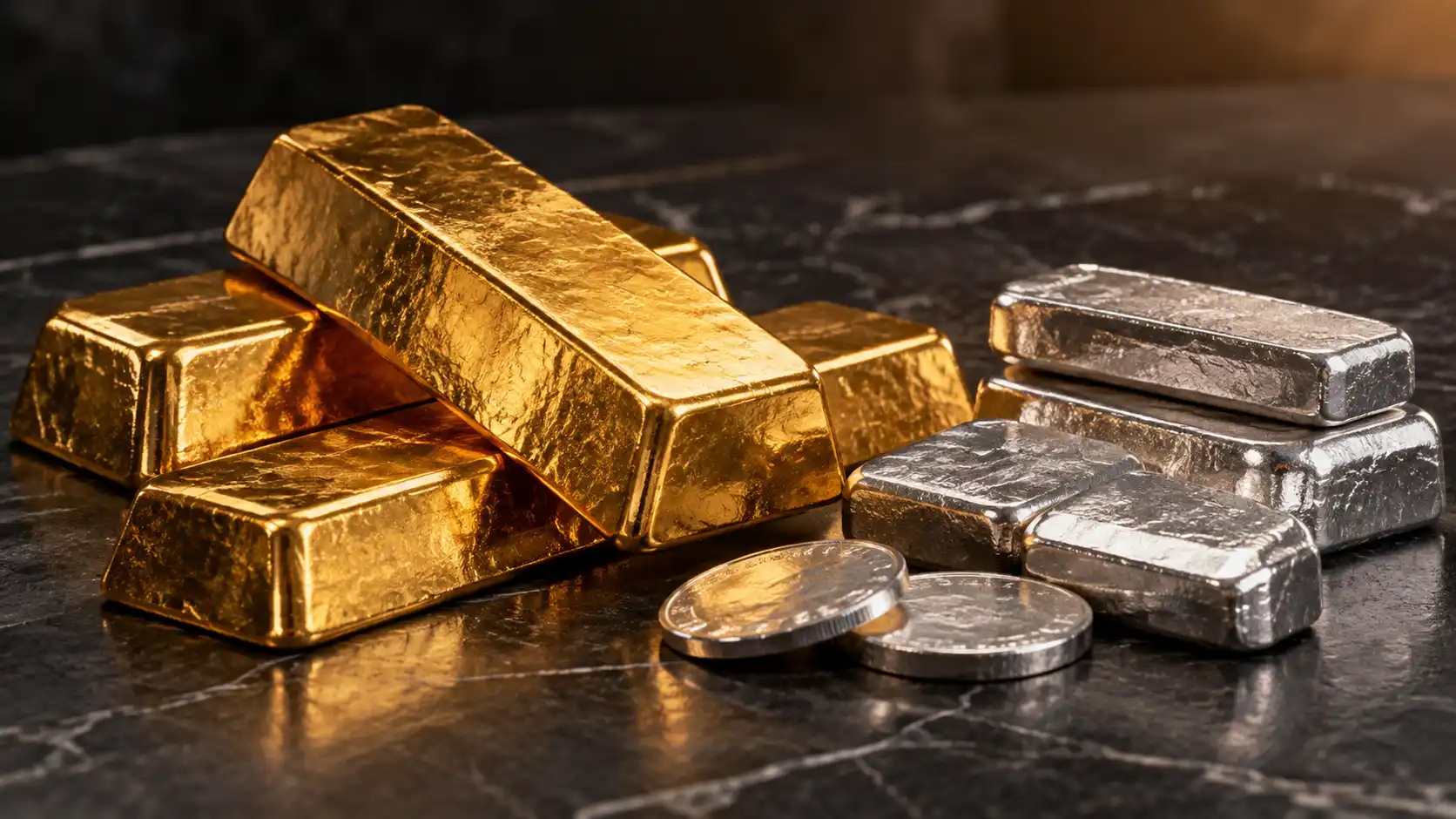
Why Gold and Silver Prices Can Fall Even When Investors Still Believe in Precious Metals
If you follow gold and silver markets, you have probably noticed something important: precious metals do not move in a straight line.
There are periods when gold and silver attract strong demand and prices rise rapidly. Then, sometimes without much warning, the market enters a correction and prices begin to move lower.
This often creates the same questions among investors: Why is gold falling? Why is silver falling? Is something wrong with the precious metals market? And does a market correction change the long-term story?
The answer is more complicated than simply saying that investors have lost confidence in gold or silver.
Precious-metal prices are influenced by several forces at the same time, including interest-rate expectations, inflation, currency movements, investor positioning, economic growth, geopolitical developments, investment demand and, in the case of silver, industrial demand.
That is why a short-term decline should always be viewed in the context of the wider market rather than through a single day's price movement.
A falling gold or silver price does not automatically mean that the long-term fundamentals of precious metals have disappeared. Market prices can move sharply in both directions as investors continuously reassess risk, liquidity, interest rates and economic expectations.
Gold and Silver Prices Are Driven by More Than One Factor
One of the biggest mistakes in understanding precious metals is looking for only one reason behind every price move.
Gold and silver operate within a much larger global financial system. Changes in interest-rate expectations can influence investor demand. Movements in major currencies can change the relative attractiveness of dollar-denominated metals. Economic data can alter expectations for growth and inflation, while geopolitical uncertainty can change the way investors manage risk.
Investor positioning can also matter.
When a market has already experienced a strong rally, some investors may decide to lock in profits. That selling can create additional short-term pressure even when other investors continue to see value in the asset.
Silver has another important layer.
Unlike gold, silver has a significant industrial role. It is used across areas such as electronics, electrical applications, solar technologies and other industrial processes.
This means silver can respond not only to investment sentiment but also to expectations surrounding manufacturing activity and the broader economy.
What Actually Happens During a Precious Metals Correction?
A market correction is simply a period in which an asset moves back from a previous level after a rise or extended period of strength.
Corrections can happen for many reasons.
Investors may take profits. Interest-rate expectations may change. Economic data may surprise the market. The U.S. dollar may strengthen. Risk appetite may increase across financial markets.
Sometimes several of these factors happen together.
This is why the same gold market can behave very differently from one week to another.
A correction also does not automatically tell us where prices will go next. Markets are forward-looking, and investors continuously react to new information.
The important question is not simply whether gold or silver is up or down today. The more useful question is what is changing underneath the market.
Gold & Silver Market Tracker
Track the latest available market data for gold and silver in USD per troy ounce.
Note: Market data is provided through TradingView. Data availability and timing may vary by instrument and data source.
The Psychology of Market Dips: Why Panic Selling is a Mistake
Now comes one of the most important parts of the precious-metals market that is often ignored: investor psychology.
Friends, whenever gold or silver prices fall, some new investors become nervous and start thinking that the market is collapsing. Because of that fear, they may rush to sell their holdings simply because prices have moved lower.
Experienced global investors often look at the same situation differently. Rather than automatically treating every correction as a permanent loss, they may study whether the decline is creating a more attractive entry point relative to their long-term objectives.
This does not mean that every market decline is a buying opportunity. Markets can continue falling, and no investor can know the exact bottom or the exact top in advance.
The larger lesson is about discipline.
Markets do not move in one direction forever. Periods of rising prices can be followed by corrections, and periods of weakness can eventually be followed by renewed demand.
For that reason, making an emotional decision based only on a short-term price move can be very different from making a decision based on a carefully considered long-term plan.

Why Gold Can Remain Important During Economic Uncertainty
Gold has occupied a unique position in the global financial system for centuries.
It is held by investors, institutions and central banks, and its role can extend beyond short-term price movements.
Investors may consider gold for diversification, portfolio protection or as a way of gaining exposure to an asset that behaves differently from certain financial assets.
This does not mean that gold always rises during periods of uncertainty. In the short term, gold can also decline when investors need liquidity, when market positioning changes or when expectations about monetary policy shift.
That distinction is important.
A long-term reason for holding an asset and its short-term price behaviour are not necessarily the same thing.
Why Silver Can Move More Sharply Than Gold
Silver deserves separate attention because its market structure is different from gold.
Silver is both a precious metal and an industrial commodity. That dual role means changes in economic expectations can influence silver in ways that are not always identical to gold.
When industrial demand expectations strengthen, silver can receive support from both investment interest and industrial use.
But when investors become concerned about economic activity or industrial demand, silver can experience greater volatility.
This is one reason investors should avoid assuming that gold and silver will always move by the same percentage or at the same speed.
What Should Investors Watch Instead of One-Day Price Moves?
If you want to understand where the precious-metals market may be heading, looking at a single price movement is rarely enough.
Investors commonly watch interest-rate expectations, inflation data, central-bank policy, currency movements, economic growth indicators, geopolitical developments, ETF flows, physical demand and broader market sentiment.
For silver, industrial indicators can also be important because the metal has significant uses beyond investment.
The purpose is not to predict every short-term movement.
The purpose is to understand the forces that are moving the market.
Price is the result you see on the screen. The real story is the combination of demand, supply, monetary policy, economic expectations and investor behaviour behind that price.
Central Bank Actions and Long-Term Trends
Friends, one of the most important developments in the global gold market has been the continued interest of central banks in holding and adding gold to their reserves.
Central-bank demand does not mean that gold prices can only move higher. Central banks can buy or sell at different times, and their activity is influenced by reserve-management decisions, prices and wider economic conditions.
However, the broader trend is important.
Gold continues to be viewed by many reserve managers as a strategic asset that can contribute to diversification and reserve management during periods of economic and geopolitical uncertainty.
The World Gold Council reported that central-bank gold demand remained elevated in 2025, with official-sector purchases estimated at hundreds of tonnes, while its 2026 survey continued to show strong interest in gold among reserve managers.
This gives us an important long-term perspective.
Short-term price fluctuations can be sharp, but the strategic role of gold within the global reserve system can continue to influence the market over much longer periods.
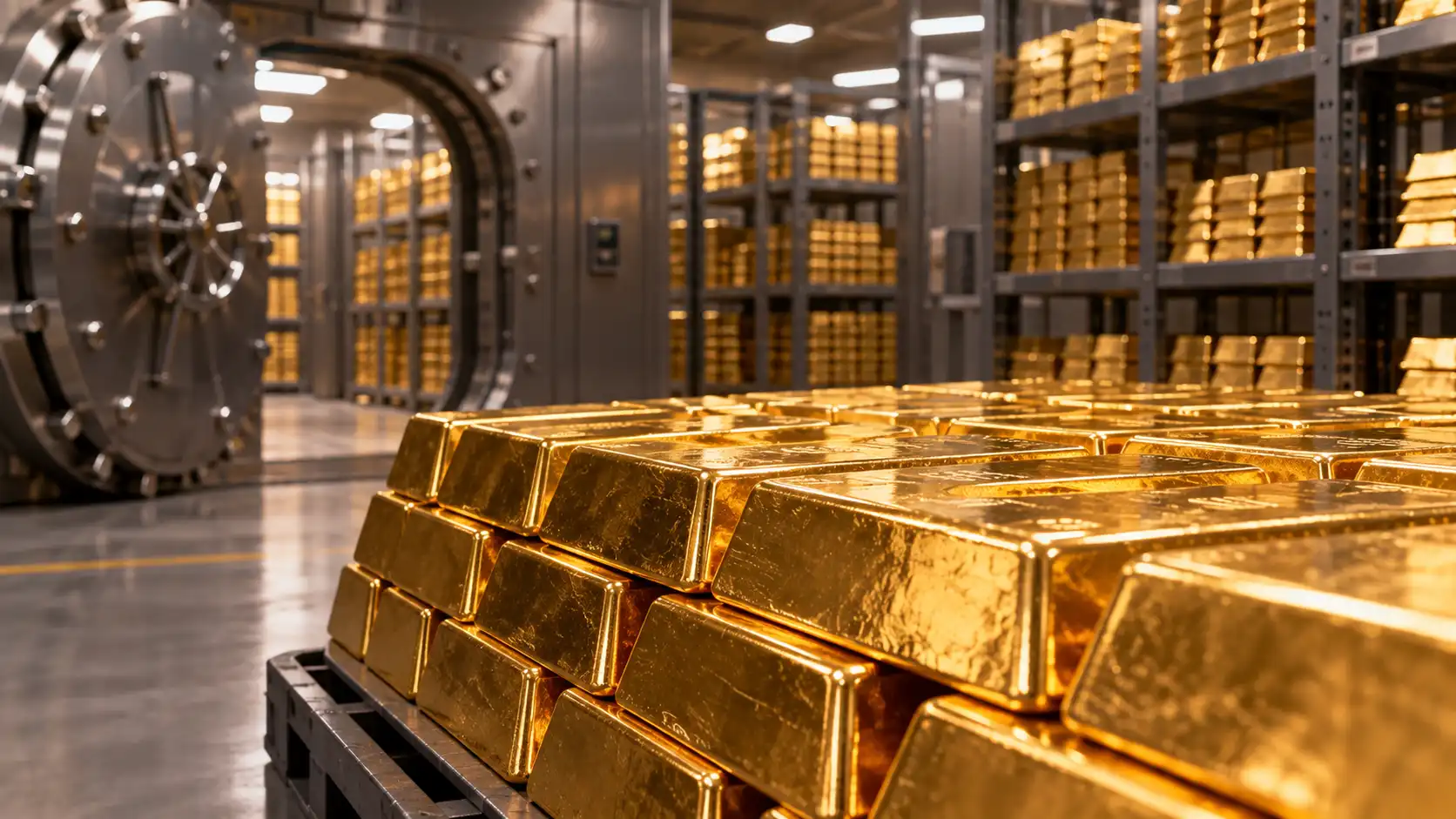
What If Commercial and Private Banks Start Buying More Gold?
Now comes another interesting question.
We often hear about central banks buying gold, but what could happen if commercial banks, private financial institutions or other large institutional investors also significantly increase their demand for physical gold?
The answer begins with supply and demand.
If large financial institutions increase their purchases of physical gold at the same time, the demand for available physical metal could become stronger.
If available supply does not increase at the same pace, stronger demand can place upward pressure on prices.
But this should not be understood as a guaranteed price outcome. Financial markets are influenced by many variables at the same time, and institutional buying can also occur through different forms of exposure rather than only through physical bullion.
Still, the basic market principle remains important: when demand increases faster than available supply, prices can face upward pressure.
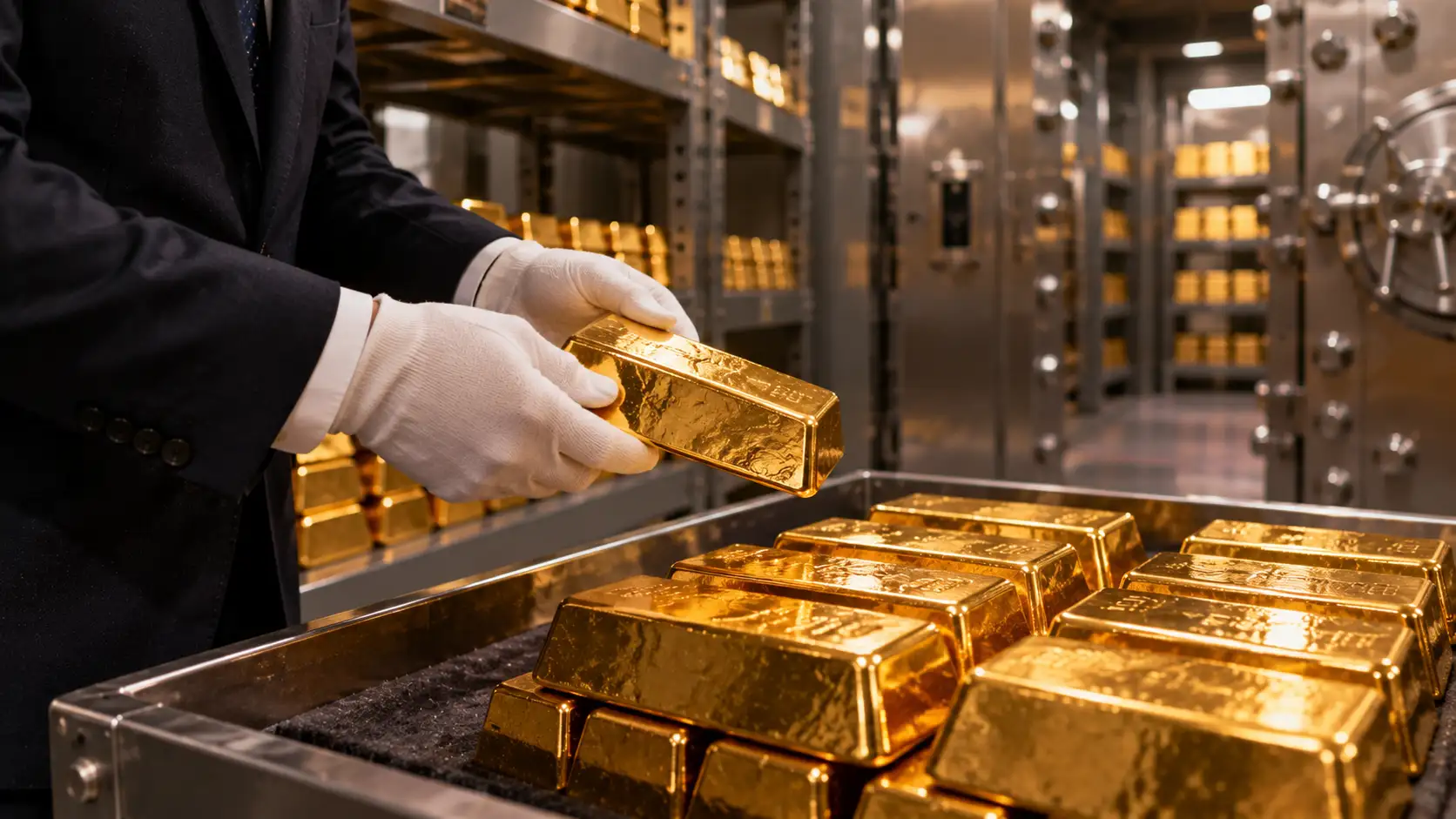
Gold Supply Also Matters
It is easy to focus only on demand when discussing gold prices, but supply is equally important.
New mine production does not instantly respond to a change in market demand. Developing a major mining project can take years and requires significant investment, regulation, infrastructure and geological development.
Recycling provides another source of supply, and recycling activity can respond to higher prices as holders become more willing to sell existing metal.
This creates a complex balance between newly mined gold, recycled metal, investment demand, jewellery demand, technology demand and official-sector activity.
That is why the gold market should be viewed as a global ecosystem rather than a simple situation where one group buys and prices automatically rise.
Why Gold and Silver Can Still Correct in a Strong Long-Term Market
This is an important point for anyone following precious metals.
Even when long-term demand remains strong, prices can experience sizeable corrections.
Markets react to expectations, not just current conditions.
If investors suddenly expect interest rates to remain higher for longer, or if the U.S. dollar strengthens, precious metals can face pressure. Likewise, if investors become more comfortable with riskier assets, some capital can temporarily move away from traditional defensive holdings.
These movements do not automatically invalidate the longer-term factors supporting precious metals.
They simply show that markets are constantly repricing information.
The Difference Between a Correction and a Change in the Long-Term Story
One of the most useful habits for an investor is learning to separate a temporary correction from a fundamental change.
A correction is primarily a price movement.
A fundamental change is something deeper: a meaningful shift in demand, supply, monetary conditions, industrial activity, investor behaviour or the role of the asset itself.
The two should not automatically be treated as the same thing.
This is why experienced market participants often examine several indicators before deciding what a price decline actually means.
The Bigger Picture for Gold and Silver Investors
Gold and silver remain important parts of the global commodities and financial markets, but they should not be treated as identical assets.
Gold is strongly influenced by investment demand, reserve management, monetary expectations and its role as a globally recognised store of value.
Silver has many of those characteristics but also has a substantial industrial component.
That difference can produce very different price behaviour during periods of economic expansion, slowdown, inflation concerns or changing investor sentiment.
For ordinary investors, this is an important reminder that buying or selling precious metals should be based on personal financial circumstances, risk tolerance, investment horizon and proper research rather than fear created by a single market headline.
The precious-metals market is bigger than today's price. Understanding the forces behind the movement is often more useful than reacting to the movement itself.
Frequently Asked Questions (FAQs)
Why are central banks heavily buying gold in recent years?
Central banks can use gold as part of their reserve-management strategy. Gold can help diversify reserves, reduce reliance on a single type of reserve asset and provide an asset that is not another country's liability.
Reserve managers may also consider gold during periods of geopolitical or economic uncertainty. Recent surveys and market data show that many central banks continue to view gold as strategically important, although the amount they buy can change from year to year.
What happens to gold prices if commercial or private banks start buying gold aggressively?
If commercial banks, private financial institutions or other large institutional buyers significantly increase their demand for physical gold, the additional demand can place upward pressure on prices, particularly if available supply does not increase at the same pace.
However, the outcome is not guaranteed. Gold prices are influenced by many other factors, including interest rates, currencies, investment flows, mining supply, recycling and broader market sentiment.
Does a fall in gold prices mean that gold has lost its long-term value?
Not necessarily. A short-term price decline can occur for many reasons, including profit-taking, changing interest-rate expectations, currency movements and changes in investor positioning.
A price correction by itself does not establish that the long-term fundamentals of gold have changed.
Why can silver fall or rise more sharply than gold?
Silver has both investment and industrial demand. Because industrial activity can influence silver consumption, changes in economic-growth expectations can sometimes produce larger price movements than investors see in gold.
Is a market correction always a buying opportunity?
No. A correction does not guarantee that prices will immediately recover. Markets can continue moving lower, and no investor can reliably identify the exact bottom in advance.
Investors should consider their own financial position, risk tolerance and investment horizon before making any decision.
What should investors watch when gold and silver prices are falling?
Investors can monitor interest-rate expectations, inflation data, central bank decisions, currency movements, economic indicators, geopolitical developments, investment flows, physical demand and, for silver, industrial-demand trends.
Finswiftnews View
My view on this entire discussion is simple.
Whenever gold and silver prices fall sharply, the first reaction should not automatically be fear.
At the same time, a falling price should not automatically be called a golden buying opportunity either.
The real job is to understand why the market is moving.
If the decline is being driven by changing interest-rate expectations, profit-taking, currency movements or temporary investor positioning, the situation can be very different from a decline caused by a lasting change in supply, demand or economic fundamentals.
This is why I believe that investors should look beyond the daily headline and study the bigger picture.
Central-bank activity, institutional demand, physical supply, industrial consumption, monetary policy and investor psychology can all influence where precious metals go next.
No one can know the exact future price of gold or silver. But understanding the market can help investors make decisions with more information and less emotion.
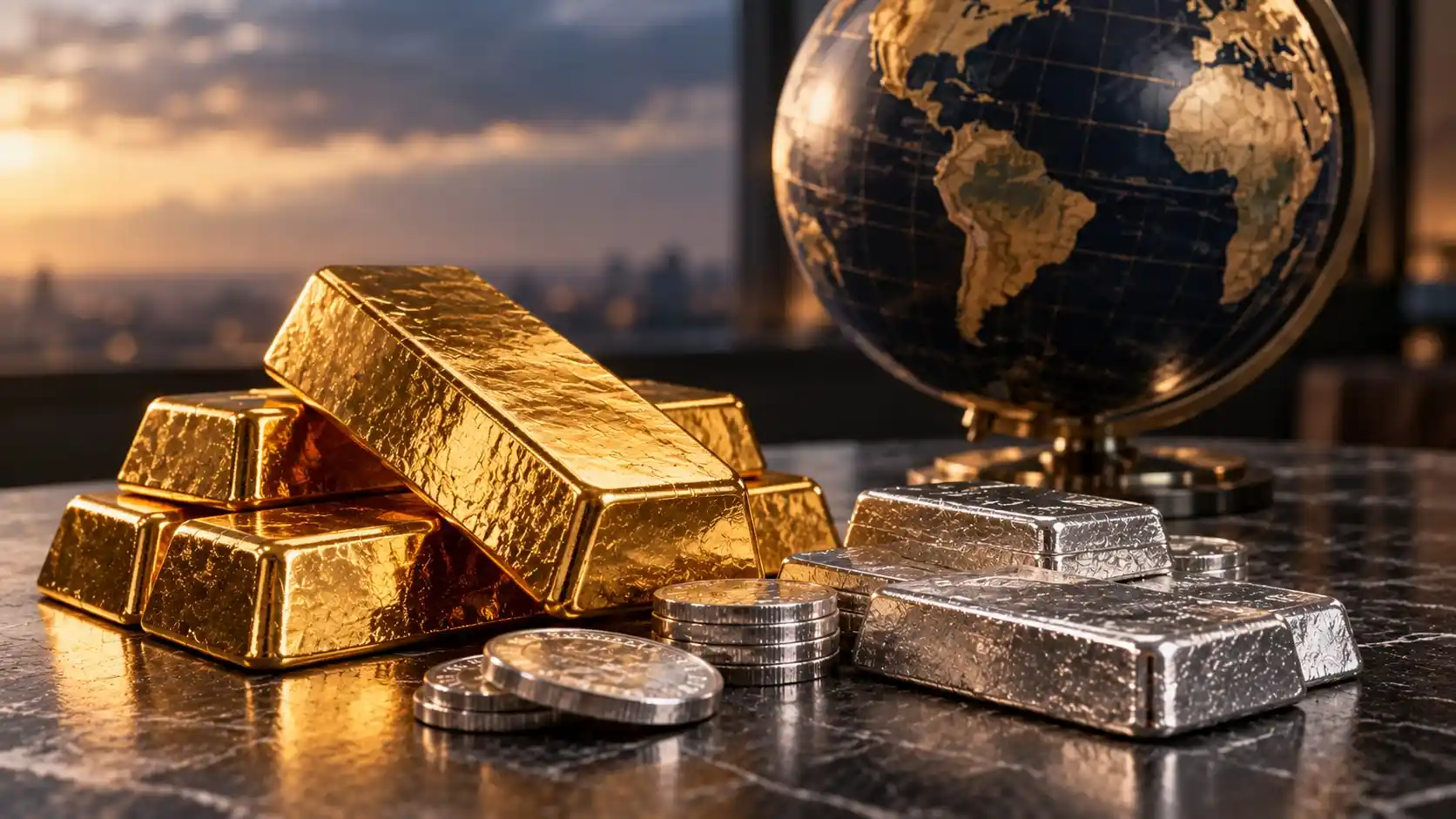
Conclusion: Look Beyond the Next Price Move
Gold and silver markets will continue to experience periods of strength, weakness and correction.
That is the nature of financial markets.
Gold can be influenced by monetary policy, reserve demand, investor sentiment and global uncertainty, while silver also responds significantly to industrial activity.
Central banks remain an important part of the long-term gold story, and changes in institutional demand can also influence the balance between supply and demand.
But none of these factors can guarantee the direction of prices tomorrow, next month or next year.
For readers following precious metals, the most useful approach is to keep watching the broader market, understand the reasons behind major price movements and avoid making important financial decisions based purely on fear or excitement.
The live Gold & Silver Market Tracker above can help readers follow current market information while the rest of this article provides the longer-term context behind those movements.
Gold and silver prices will move. The bigger question is whether you understand what is moving them.
Editorial Note
This Finswiftnews article is an original editorial feature designed to explain gold and silver market movements, investor psychology, central bank demand, institutional activity and long-term precious-metals trends in a clear and reader-friendly format.
The article combines market context, publicly available information and explanatory analysis. Market conditions can change quickly, so readers should review current market data and official sources when evaluating financial information.
Author: Chavda Dilavarkumar
Publisher: Finswiftnews
Category: Gold & Silver, Global Finance
Published: June 25, 2026
Last Updated: September 26, 2026
Fact Checked: September 26, 2026
Editorial Review: Finswiftnews
Fact Check & Editorial Information
This article uses publicly available information relevant to the global precious-metals market, including information from the World Gold Council, the Silver Institute, market-data providers and other reliable industry sources.
Primary-source research includes official central-bank and reserve information, recognised precious-metals industry reports, publicly available market data and relevant economic information.
The live market tracker on this page is provided through TradingView. Market data availability, timing and values may vary by instrument and data source.
Because gold and silver markets change continuously, readers should verify current prices and important market information through the relevant primary or official sources.
About the Author
Chavda Dilavarkumar is the founder and publisher of Finswiftnews, an independent digital news and information platform covering global finance, markets, immigration, technology and major economic developments.
Finswiftnews focuses on explaining complex global developments in a clear, reader-friendly format while providing relevant context for readers around the world.
Disclaimer
The information published on Finswiftnews is provided for educational, informational, and news reporting purposes only. While we strive to use reliable and publicly available sources, we do not guarantee that all information is complete, accurate, or up to date. Readers should verify important information through official sources before making any financial, legal, immigration, tax, or other important decisions. Finswiftnews and the author are not responsible for any loss or damages resulting from the use of, or reliance on, the information published on this website.
Post a Comment